The Digital Toolkit: Unpacking Gaming Computer Elements Vector Art
In the realm of digital design and content creation, assets like vector art collections serve as foundational tools. Among these, the Gaming Computer Elements Set Vector Art represents a specialized and increasingly popular resource. This isn't merely a set of random icons; it is a coherent visual lexicon designed to articulate the world of gaming technology, culture, and infrastructure. For a broad audience from business owners crafting marketing materials to educators designing course content, understanding the composition and utility of such a collection is key to leveraging its full potential.
Deconstructing the Doodle Gamer Set Illustration
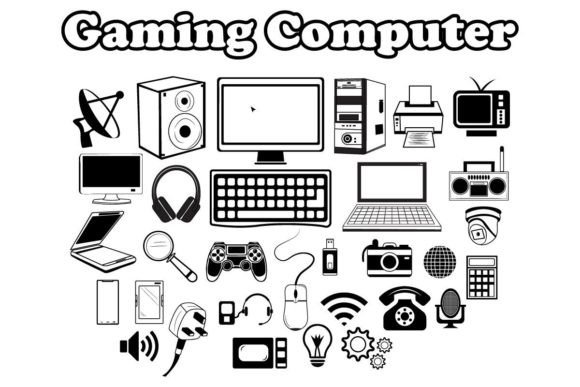
At first glance, a collection labeled Gaming Computer elements Doodle gamer set illustration Vector Art might seem straightforward. However, its value lies in its deliberate curation. Typically, such a set breaks down into distinct categories of elements. The core, of course, is the hardware: stylized renderings of gaming PCs, monitors with exaggerated refresh rate indicators, ergonomic chairs, keyboards with highlighted mechanical keys, mice, headsets, and consoles. These are not photorealistic but are simplified, often with a playful or "doodle" aesthetic that conveys function and form without overwhelming detail.
Beyond the physical machines, these sets frequently include abstracted elements representing software and connectivity. Visual symbols for graphics processing units (GPUs), central processing units (CPUs), cooling systems like liquid cooling rigs, and network icons for streaming or online play are common. The "gamer" aspect brings in peripheral imagery: trophy icons, controller button overlays (A, B, X, Y), representation of popular game genres through simple symbols, and perhaps avatars or silhouettes of gamers themselves. This holistic approach means the vector art can describe a system, an activity, or an entire ecosystem.
Characteristics of Effective Gaming Vector Collections
What separates a generic set from a truly useful one? Several characteristics stand out. First is scalability and editability. Being true vector art (often provided in SVG or editable AI/ EPS source files), each element can be resized infinitely without loss of quality, colors can be altered to match any brand palette, and components can be isolated or combined. A high-quality 300 DPI raster backup (like JPG or PNG) ensures readiness for any application where vectors aren't natively supported.
Second is semantic clarity. Each icon or illustration should be immediately recognizable to its target audience. A doodle-style cooling fan should clearly be a cooling fan, not a generic propeller. Third is cohesive style. The entire set should share a consistent line weight, level of detail, and artistic approach—whether it's sketchy, flat, shaded, or outline-based. This consistency allows designers to mix multiple elements from the set within a single composition without visual discord.
Practical Applications Across User Groups
The utility of this specific vector art transcends the obvious realm of gaming websites. Let's explore its real-world relevance for different segments of the audience.
For Professionals and Business Owners
Marketing agencies, gaming hardware companies, and eSports organizations use these assets extensively. A Gaming Computer Elements Set Vector Art can quickly populate a brochure for a new PC line, illustrate a technical specification sheet by breaking down components visually, or create engaging social media graphics announcing a tournament. The ability to rearrange elements as you want, thanks to the provided editable source file, means a single purchase can yield countless unique marketing collateral pieces, saving significant design time and cost.
For Creators and Educators
YouTube content creators making tech reviews or tutorial videos use these vectors in their thumbnails and on-screen graphics. An educator teaching a course on computer hardware or digital culture can incorporate these clear, uncluttered illustrations into presentations and handouts to explain complex components like GPUs or network setups. The doodle style often has an approachable, less technical feel that can aid in learning.
For Researchers and Hobbyists
Even in academic or community presentations, visual aids are crucial. A researcher presenting on the socio-economic impact of eSports might use these elements to visually define the tools of the industry in their slides. Hobbyists running a community blog or forum can use the high-resolution JPG or PNG files to create banners, infographics comparing hardware, or visual guides for PC building.
Workflow Integration and Considerations
How does one actually implement such a vector set? The typical offering—including an editable source file (like .AI or .EPS), a ready-to-upload PDF, high-resolution JPGs, PNGs, and SVG files—covers virtually all workflow needs. The editable source file is the powerhouse, opened in Adobe Illustrator, CorelDRAW, or similar vector software, allowing complete deconstruction and customization. The PDF is useful for quick placement in page layout software or for client previews. The raster files (JPG, PNG) are drag-and-drop solutions for software like Photoshop, Canva, or even PowerPoint.
A key consideration is licensing and intended use. Most such sets are sold for commercial use, but it's always prudent to verify. Another consideration is style matching. Does the doodle gamer aesthetic align with the existing brand identity or project tone? Sometimes, a more technical, clean vector set might be preferable; other times, the playful doodle style is exactly what communicates the intended message of creativity and engagement.
The Advantage of a Complete Set Over Singular Assets
Purchasing or utilizing a complete set, rather than sourcing individual icons from disparate collections, offers profound advantages. It guarantees stylistic harmony across a project. It also ensures conceptual completeness; if you need to illustrate a gaming setup, you'll have the PC, the monitor, the chair, the peripherals, and perhaps even the ambient game icons all in the same visual language. This saves immense time searching for matching assets and creates a more professional, cohesive final product.
Observing Trends in Digital Asset Creation
The popularity of themed vector sets like this reflects broader trends. First, there's a move towards niche specialization. Rather than generic "technology" icons, designers demand assets tailored to specific subfields like gaming, cryptocurrency, or medical tech. Second, the "doodle" or hand-drawn style continues to be favored for its human, accessible, and often less corporate feel, making it ideal for communities, educational content, and brands wanting a friendly image. Finally, the provision of multiple file formats (SVG, PNG, JPG, PDF, source files) is now a standard expectation, acknowledging the diverse software ecosystems used by professionals, hobbyists, and businesses alike.
In practice, this means that whether you are a professional designer creating a campaign for a gaming headset launch, a teacher building a module on digital entertainment systems, or a community manager enhancing a forum's visual appeal, a well-crafted Gaming Computer Elements Set Vector Art collection acts as a versatile digital toolkit. Its value is not just in the individual images, but in the coherent vocabulary it provides to visually communicate ideas about a dynamic and multifaceted aspect of modern technology and culture.