Beyond the Cover: Mastering the Market for Video Gaming Themed Composition Notebooks
For creators and entrepreneurs on Amazon KDP, the allure of niche products like a Video Gaming Themed Composition Notebook is strong. It’s a product with clear audience appeal: gamers, students, streamers, and professionals who want to jot down strategies, session notes, or creative ideas in a notebook that resonates with their passion. The design potential is vast, ranging from minimalist controller graphics to vibrant scenes from popular RPGs. Yet, many publishers find themselves in a frustrating cycle: they publish a beautifully designed notebook, but sales remain at zero. The harsh lesson of the marketplace is that a good design alone is rarely enough to guarantee visibility or success.
The Critical Oversight: Design vs. Discoverability
A common and costly misunderstanding is equating a great cover with a viable product. You might create the most visually stunning Video Gaming Themed Composition Notebook, imagining it catching the eye of every passing customer. However, on a platform like Amazon, customers must first find your book before they can appreciate its design. If your notebook is buried on page 10 of the search results for "gaming notebook," its beautiful art is functionally invisible. This oversight directly affects your bottom line, transforming your creative effort into a digital shelf ornament rather than a profitable item.
The root of this problem is a lack of strategic keyword integration. Keywords are the signposts that guide Amazon’s search algorithm and potential buyers to your product. Without leveraging the right terms, you are essentially hoping customers stumble upon your work by chance. This approach ignores the fundamental way people shop online: they use search queries.
What to Check Before You Publish
Before you finalize your next gaming notebook design, pause and ask: "What specific words will my ideal customer type into Amazon's search bar?" Think beyond the generic. While "gaming notebook" is a start, consider more specific, long-tail keywords that reflect intent and niche. For example, a customer might search for "Minecraft journal for notes," "competitive esports training log," or "retro arcade themed composition book." These phrases indicate a clearer need and a more targeted audience. Your product’s title, subtitle, and backend search terms should thoughtfully incorporate these phrases.
Moving From Guesswork to Data-Driven Decisions
Another frequent mistake is relying on intuition or cursory research for keyword selection. You might pick terms that seem logical, but without data, you cannot gauge their actual value. Is there sufficient search volume? Is the competition too saturated? A term like "video game diary" might have low competition, but if only a handful of people search for it monthly, it won’t drive meaningful traffic. Conversely, a high-volume term like "composition notebook" is likely overwhelmingly competitive, making it hard for a new niche product to rank.
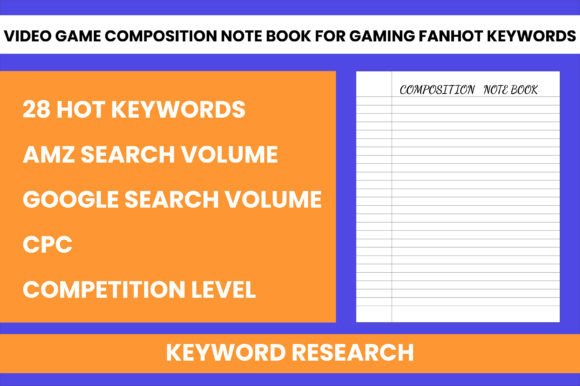
This is where a shift to a data-analysis approach becomes your greatest advantage. By validating keywords with concrete metrics—such as Amazon and Google search volume, CPC (Cost Per Click), and a clear assessment of competition level—you move from publishing hopeful guesses to launching targeted assets. This analysis helps you identify not only profitable keywords for your existing Video Gaming Themed Composition Notebook idea but also uncovers entirely new, underserved niches within the gaming community. Perhaps data reveals an opportunity for notebooks themed around specific genres like "indie game development planner" or "cozy gaming logbook," markets you hadn't initially considered.
Practical Advice for Sustainable Success
To avoid these pitfalls and build a more resilient publishing strategy, adopt these practical approaches.
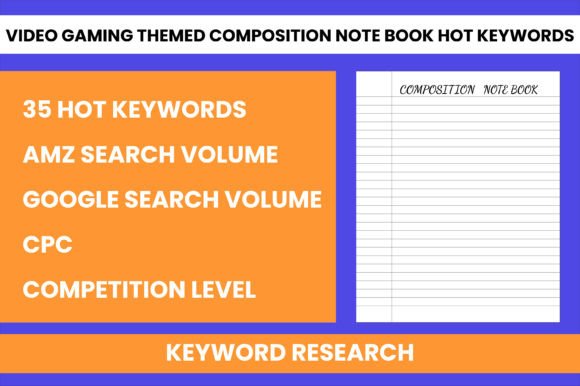
First, treat keyword research as a foundational step, not an afterthought. Begin your project by exploring the search landscape. Use available tools and data—like comprehensive Excel sheets that analyze keyword metrics—to map out the territory. A file that lists 35 profitable keywords alongside their AMZ search volume, competition, and other data provides a actionable starting point. For instance, seeing that "gamer gift notebook" has high search volume and moderate competition could inspire you to optimize your listing for that phrase and even tailor the notebook’s description to highlight its suitability as a gift.
Second, integrate keywords naturally into your content. Keyword stuffing—forcing terms repetitively into your title or description—creates a clunky, unprofessional reading experience and can be penalized by algorithms. Instead, weave the terms seamlessly. A natural title might be: "Arcade Legacy: A Retro Gaming Themed Composition Notebook for Strategies & Sketches." This includes semantic keywords ("retro gaming," "strategies," "sketches") while remaining reader-friendly.
Finally, view each publication as an experiment informed by data. If a notebook themed around a broad genre doesn't perform well, your keyword analysis might guide you to pivot to a more specific sub-niche for your next design. This iterative process, fueled by concrete information, steadily increases your chances of landing on the coveted first page of Amazon search results, where visibility translates directly into sales.
Building a Helpful and Trustworthy Presence
Following Google’s E-E-A-T (Experience, Expertise, Authoritativeness, Trustworthiness) principles means creating content that genuinely helps your customer decide. Your product description should go beyond listing features. Explain how this specific Video Gaming Themed Composition Notebook serves a gamer’s needs: the paper quality is suitable for quick pencil sketches of character designs, the binding is durable for transport to tournaments, the margins are wide for annotating gameplay footage. This demonstrates expertise and builds trust, making the customer feel you understand their world, which is far more compelling than a simple aesthetic appeal.
Remember, success on platforms like Amazon KDP is a blend of art and science. The art is your compelling design for a gaming themed notebook. The science is the strategic use of validated, low-competition keywords to ensure that design is discovered by the community eager to see it. By balancing both, you transform your creative publication from an unseen artifact into a thriving product that connects with its audience and builds a sustainable publishing venture.